


Joe Root – Biography and Career Overview
Joe Root is one of the most complete batters of his era—calm under pressure, endlessly adaptable, and relentlessly productive across formats. If you’re looking for a clear, human-centered Joe Root biography that also weaves in practical details—joe root stats, joe root highest score, joe root total runs, joe root age, joe root height in feet, joe root net worth, and more—you’re in the right place. What follows is a guided tour through the sports career of Joe Root, from Sheffield schoolboy to England great, with the context needed to understand why his achievements endure.
Early Life and Background

Childhood and Introduction to Cricket
Root’s story starts in Sheffield, a city with enough sporting DNA to nudge any talented child toward discipline and competition. Born on December 30, 1990, the future England batter grew up with cricket stitched into family life. His parents encouraged healthy sporting curiosity: football in the park, cricket in the nets, and a general sense that time spent honing a craft was time well spent. If you’re wondering where was Joe Root born, the answer—Sheffield—matters because Yorkshire’s club culture was close at hand, offering clear ladders for the gifted and dedicated.
At school, Root looked like the classic overachiever who wasn’t loud about it: neat technique, quiet focus, and the repeatable routines that would later define him as a pro. Coaches noticed he was unusually coachable; he absorbed corrections quickly and rarely made the same mistake twice. That temperament—emotional control without losing competitive edge—would become a Root signature and a major reason his joe root stats look so steady across years and conditions.
Early Career at Yorkshire
Yorkshire’s pathway is unforgiving in the best sense: if you perform, you move up; if you don’t, there’s always another youngster queuing behind you. Root’s age-group numbers were strong, but what impressed selectors more was his ability to play “grown-up” cricket: he left well, defended with soft hands, and punished anything loose without forcing the tempo. By late teens, he seemed older than his years in cricketing judgment.
Breaking into the Yorkshire senior setup deepened that maturity. Root learned how to build an innings on capricious early-season pitches, how to survive good balls by respecting them, and how to turn starts into something meaningful. Those long, honest county days—cloudy, chilly, bowlers on top—taught him run-making as a craft rather than a mood. The county circuit sharpened Root’s sense of risk management, setting up the Test player he would become and laying the foundation for the sports career of Joe Root that England fans now take for granted.
International Career
England Debut and Early Success
Root’s England debut came in 2012, during a period when England needed reliability as much as flair. He didn’t try to dazzle; he tried to belong. That meant trusting his method: compact setup, late contact, and scoring options that flowed naturally from a good base. In early innings he was all discipline and angles, busy between the wickets rather than showy with the bat face. The selectors loved that he “fit” immediately—no panic, no drama, just runs.
Those initial months were a condensed masterclass in adaptation. Root moved across formats without losing identity. In ODIs, he rotated strike and targeted gaps; in Tests, he built patiently; in T20Is, he accelerated with calculated risk. That chameleonic quality turns up again and again in joe root stats charts: high averages in Tests, productivity in ODIs, and situational usefulness in T20Is. Very quickly, Root stopped being the “next big thing” and became England’s default solution in a crisis.

Key Milestones and Records
A handful of milestones help explain why joe root career is already parked in the all-time conversation:
- Longevity with productivity: Many players last; fewer remain central to strategy. Root did both, staying first-choice across formats for more than a decade.
- Conversion and consistency: Critics used to nitpick his conversion of fifties to hundreds. Root answered by refining his gears, producing longer innings in the mid-to-late 2010s and early 2020s.
- Leadership era: From 2017 to 2022, he captained England’s Test side through highs, rebuilds, and COVID-era complexities, a period that taught him resilience and the value of clear messaging.
- Run-accumulation in Asia and at home: He learned to sweep and reverse-sweep with control, a crucial skill in Asia, while also dominating English summers with classical seam-bowling management.
Fans often bundle these markers under the umbrella of joe root stats, but the numbers only make full sense when you appreciate the method underlying them. His ledger reflects a batter who solved problems in sequence: first survival, then control, then expansion.
Notable Performances in Tests, ODIs, and T20Is
Tests:
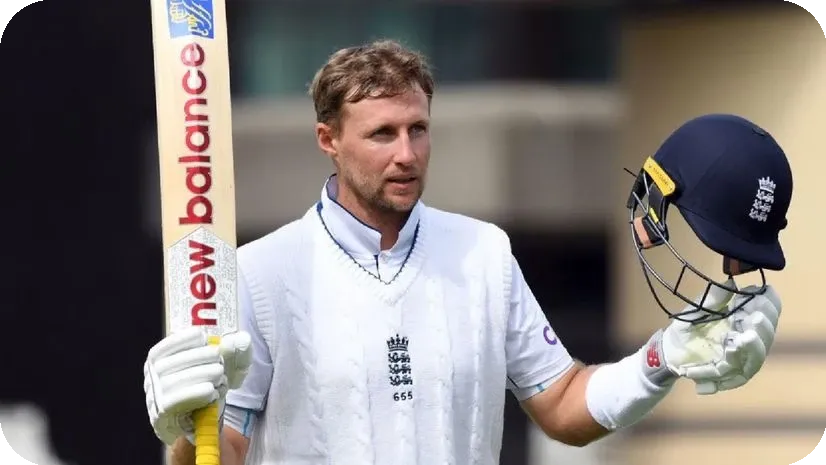
If you remember one score, make it joe root highest score: 254 against Pakistan in 2016, an innings that married restraint with punishment. He left with discipline early, expanded his scoring arcs as the ball softened, and ran Pakistan ragged once he was set. The knock became a reference point for Root’s ceiling and patience. Outside that headline, he owns a library of match-shaping centuries: series in India, England summers where he looked a class apart, and winter tours when his sweep variations blunted spin.
ODIs:
Root’s ODI value lives in the grammar of an innings. He starts in singles, reads fields, and accelerates through risk-adjusted boundary options. During England’s white-ball rise, Root offered stability at No. 3 or 4, allowing the hitters around him to go hard. While others grabbed highlights, Root frequently owned the chase mathematics—knowing when to cash in and when to absorb pressure.
T20Is:
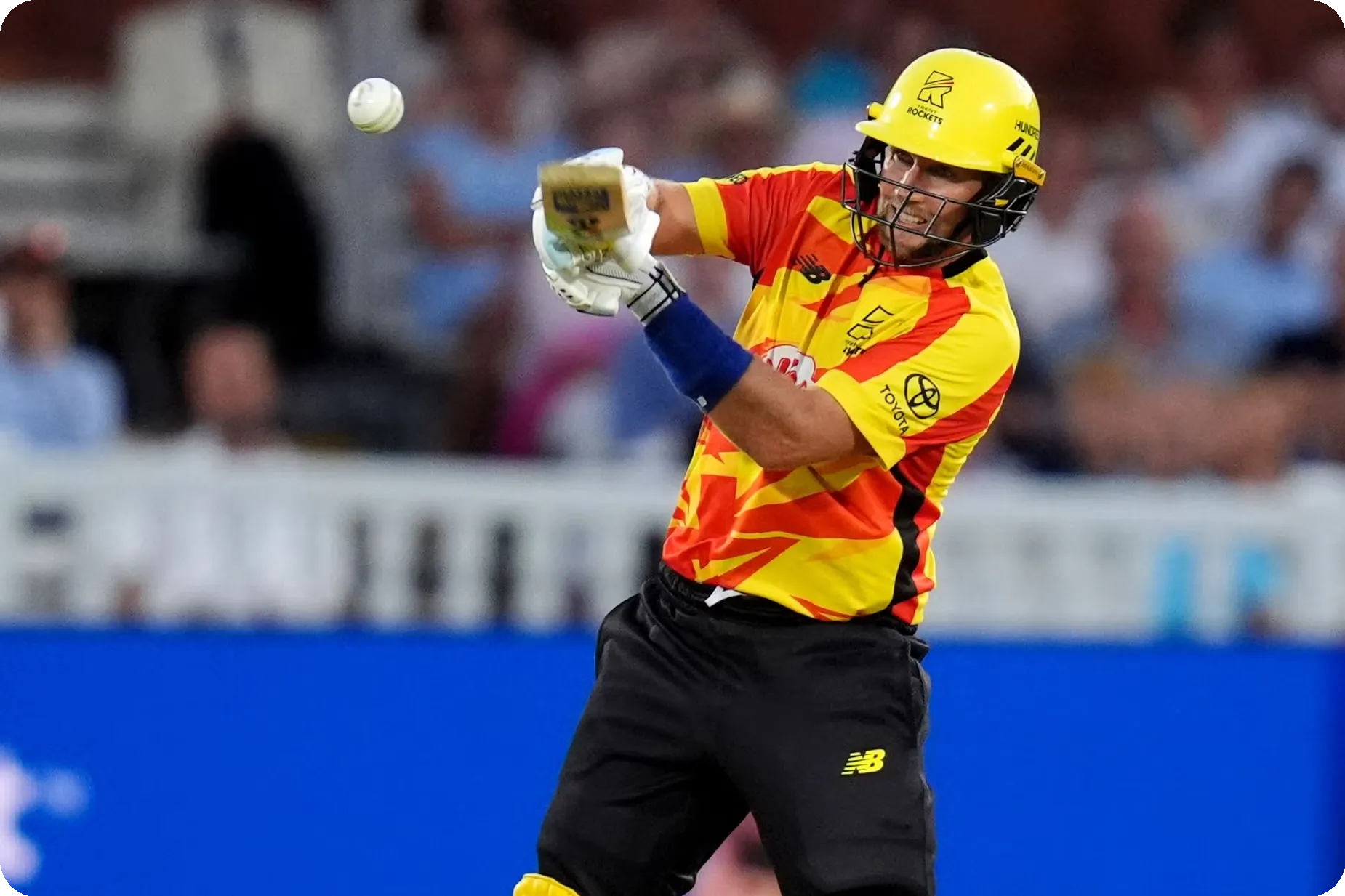
Root is not a power-hitter in the new-age sense, but he’s a situational T20 batter with impeccable timing and placement. He can bat in the powerplay with touch, glue the middle overs, and finish if needed. In tournaments, Root’s contributions tend to appear as “the calm 40 off 28” that keeps a chase on schedule or changes par by ten runs.
Joe Root’s Batting Style and Strengths

Technique and Key Strengths as a Batsman
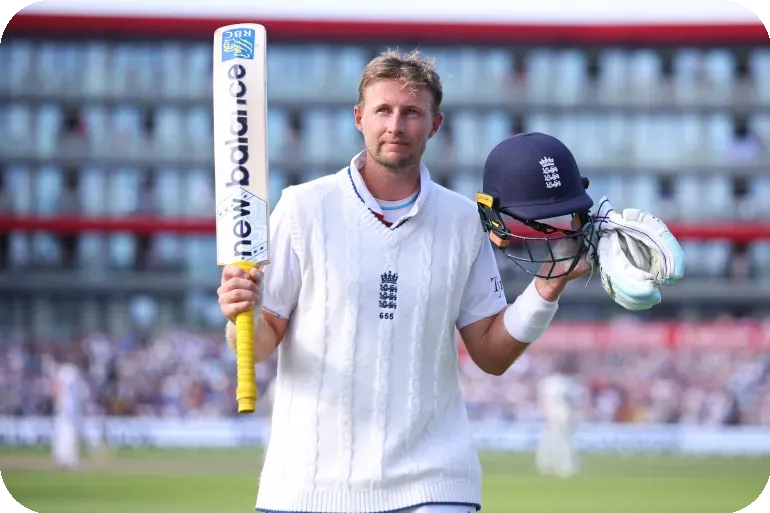
Root’s method is a study in minimalism: small movements, stable head, and a late contact point that gives him a fraction more information before committing. That fraction is everything. It means he can play the ball under his eyes, use soft hands, and deflect even good deliveries into gaps. Three pillars define his game:
- Alignment and balance
Root’s stance is neutral. He’s never closed off or overly open; he’s athletic and ready. Because he’s balanced, he rarely overreaches. You’ll often see him “ride” length balls rather than stab at them, which reduces edge chances and keeps fielders bored. - Late decision-making
Hitting late lets Root change his mind without panic. He can check a drive, turn a punch into a dab, or go from a leave to a late cut if the width appears. This late decision window is pivotal on seaming English tracks and against high-class spin. - Scoring options that don’t shout
Root scores through deflections, glides, and quick singles. He loves the open-face punch through backward point, the on-drive when bowlers search for swing, and above all the family of sweeps—standard, slog, and reverse—that unpick strong spin attacks. When he’s in rhythm, the field looks too small for his angles.
Because these habits travel well, Root’s away record didn’t sag like many batters of the swinging-seaming era. He learned how to control the inner half of the bat against reverse swing, how to “beat” extra bounce in Australia, and how to keep the bat face open without flashing in Asia. That adaptability is why the sports career of Joe Root remained elite even as attacks evolved.
Fitness and preparation:
Root is not the loudest gym story, but he is reliably conditioned. He runs well between wickets deep into the day, an overlooked factor in how he turns 30s into 70s and 70s into 140s. Preparation is cinematic in its detail: scenario nets, bowlers simulating specific opponents, and high-repetition drills that keep muscle memory tuned.
Mental game:
The phrase “inner calm” gets overused, but with Root it fits. He treats batting as a series of solvable puzzles: location, pace, bounce, movement, and field shape. He doesn’t force mastery on an uncooperative day; he keeps the board alive and waits for a misfield, a tired over, or a change in ball condition.
Leadership Role as Captain of England
Root’s captaincy tenure (2017–2022) unfolded during a complex period: format prioritization, scheduling compression, bio-secure bubbles, and a public hungry for results. He captained hundreds of sessions rather than dozens of highlights. That volume meant he lived the unglamorous captaincy tasks—field placements for bowlers out of rhythm, messages to a dressing room that had already heard them twice, constant triage between long-term strategy and short-term survival.
What he changed:
- Clarity of roles: Root’s leadership emphasized clarity—batters knowing their gears, bowlers understanding their spells and plans.
- Spin strategies in Asia: Under Root, England doubled down on sweep variations and fielding patterns that clogged high-percentage spin options.
- Calm during transitions: He led through squad churn and form cycles, never playing panic cricket even when results demanded noise.
What he learned:
Stepping down in 2022 let Root refocus purely on batting. The leadership residue remained, though: his communication in team huddles, his read of match tempo, and his empathy with younger players. Even without the armband, he continued to function as a senior leader—first into the nets, last to complain.

Memorable Moments in Joe Root’s Career
Joe Root’s career is a sequence of carefully built innings punctuated by days when everything clicked and the scoreboard galloped. Some moments are obvious—double hundreds, captaincy milestones, series-clinching knocks. Others are quieter but just as decisive: the gritty hundreds in hostile conditions, the marathon stays that changed the tone of a tour, the ice-cold chases that turned chaos into calm. Together they explain why he is bracketed with the best of his generation and why his highlights reel keeps growing.

Record-Breaking Innings
Root’s “record” days tend to be less about fireworks and more about control stretched over hours. The classic example is the 254 against Pakistan at Old Trafford in 2016. That innings showed nearly everything about his method: early leaves that bored the bowlers, late hands that killed the edge, and a gradual widening of scoring options once the ball softened. By the time Pakistan ran out of ideas, Root was batting on his terms, harvesting boundaries with the precision of a craftsman rather than the force of a slugger. As a calling card for his prime, 254 is still the reference point: mastery without recklessness.
Another banner entry arrived in Hamilton in 2019, a 226 that began like many Root epics—with a tidy base and a refusal to chase balls the pitch did not demand he play. New Zealand’s attack tried the full menu: wobble seam, bouncers, dry spells to lure a mistake. Root’s answer was patience first, then placement. Once set, he stitched partnerships that changed the gravity of the match. If you map his wagon wheel from that innings, you see the geometry of modern accumulation: thirds and quarters of the ground picked clean by timing and angles rather than brute force.
Then came 2021, a personal annus mirabilis that turned into a statistical monument. Hundreds in Galle (228) and Chennai (218) bookended a lesson in spin management: the conventional sweep, the slog-sweep, and the late dab behind point that forces captains into awkward fields. Those subcontinental doubles did more than stack numbers; they reset the storyline for English batters in Asia by proving you could dominate high-class spin through tempo control and smart shot families, not just power. Later that year he unfurled a serenely ruthless 180 not out at Lord’s against India, an innings that looked inevitable only in hindsight. On the day, it was a masterclass in batting long without locking into one pace.
Layer these innings across the calendar and the record books start to reflect a broader truth: Root’s peaks aren’t outliers; they are the visible tips of a repeatable process. It’s why he soared past the five-figure Test runs landmark and why he became (at the time) England’s youngest to 10,000 Test runs, matching the age-mark of another great opener. Big numbers followed form, not fable.
Captaining England to Major Victories
As captain from 2017 to 2022, Root’s tenure was lived in full public view—selection debates, tactical autopsies, endless conversations about balance and intent. Inside that noise were real, tangible wins that carried historical weight. The 2018 home series against India, won 4–1, stands out not for the margin alone but for the manner: England kept finding ways to flip sessions. Root’s contributions with the bat and the calm cadence of his field settings gave the attack clear plans, particularly in pressure moments late in the day.
If 2018 at home was a statement, the 3–0 sweep in Sri Lanka that same year was a blueprint. England normally sweat in those conditions; Root’s side thrived. The team doubled down on the sweep family with method rather than hope, packed catching positions imaginatively, and forced local attacks to bowl to unfriendly fields. Root himself scored a decisive hundred in Colombo with that now-signature balance between risk and control. The result had historic resonance: an away whitewash in Asia is a currency of its own.
In early 2020, a 3–1 series victory in South Africa reinforced the idea that Root’s leadership could travel. England mixed youth and experience up front, bought in to short, hostile bursts from the seamers, and batted with a discipline that wore the home side down. Captaining in South Africa tests your resource management as much as your imagination; Root passed both checks.
He finished with the most Test wins by an England captain to that point. The balance sheet inevitably includes lean stretches—every long captaincy does—but the headline triumphs were not accidents. They were the product of clear messaging, selections aligned to conditions, and field plans that responded rather than reacted. When he handed the reins over in 2022, he left a dressing-room culture that prized preparation and patience—habits that outlast any one armband.

Personal Life
Root’s cricket fills the calendar, but the person behind the statistics is low-profile by design: family-first, routine-friendly, and quietly engaged in causes he cares about. That equilibrium—work that demands everything and a private life that restores what cricket takes—has been central to his longevity.
Off-Field Interests and Charity Work
Off the field, Root’s interests track closely with the messages he’s preached as a senior pro: give young players access, keep the pathways open, use the game to teach resilience. He has been a visible supporter of youth-cricket initiatives across England, lending time and profile to programs that bring cricket into schools and community clubs. When he speaks about that work, he’s less a celebrity patron and more a graduate of the system who knows how life-changing a safe, structured sporting environment can be.
He has also thrown his weight behind health and family-oriented charities that intersect with cricket’s calendar. Foundation days at Test grounds, fundraising campaigns tied to landmark matches, and awareness drives where players front the messaging—Root turns up, speaks plainly, and avoids the performative tone that sometimes shadows sports philanthropy. The through-line is authenticity: the topics he supports map to real lives of fans who fill the stands and run the clubs.
Away from formal charity work, Root is a student of sport and habit. Fitness is functional rather than theatrical; you won’t see him chasing personal-best lifts for social clips. He prefers routines that extend batting concentration and sharpen footwork late into long days—mobility, repeatable drills, and runs that mimic between-the-wickets patterns. He follows other sports with the curiosity of a lifelong competitor, mining them for ideas about decision-making, tempo, and recovery.

Family and Lifestyle
Root married in 2018, and the family base he and his wife have built is the quiet constant behind a nomadic job. They keep the details of that life mostly out of the public square, which is both sensible and increasingly rare. What does surface—photos from milestone days, casual references in interviews—paints a picture of a home geared towards balance: enough privacy to unwind, enough structure to handle the travel churn.
Lifestyle choices mirror the way he bats: controlled, repeatable, unspectacular to the eye and optimal over time. He eats for performance, not for trends; he trains for repeatability, not just for aesthetics. In the off-season, he’s closer to home comforts and school-run logistics than media tours. That “normal life” is a performance edge. It keeps the sport in perspective, preserves energy for the parts of cricket that actually decide results, and builds a support system strong enough to ride out dips in form without panic.
Legacy and Future Prospects
Root’s legacy is already secure in the two currencies that matter most: runs and example. The first is obvious—volume at high average, spread across conditions, with a library of high-leverage centuries. The second is subtler but arguably more important for English cricket: a batting blueprint that is teachable, portable, and kind to careers. In the era of instant acceleration and white-ball gravity, he proved that classical methods could coexist with modern demands.
Impact on English Cricket
At the national level, Root’s impact begins with standards. He normalized the idea that a top-order batter must do more than “look the part” for an hour; you must live on the pitch for sessions, not spells. Younger batters who entered the team during and after his captaincy absorbed that expectation, as well as the value placed on small, repeatable advantages: soft hands into the cordon, trusting the leave on a moving ball, carrying fitness to keep the running sharp at hour six.
Technically, his game strengthened England’s options in Asia, a long-standing pain point. By proving that sweep families could be used proactively without recklessness—paired with precise footwork and a stubborn straight bat—he helped rewire collective confidence on turning pitches. Coaches could point to more than theory; they had film of an English batter taking control against elite spin through decision timing rather than slogging.
Culturally, Root’s press-room tone and training-ground habits kept volatility in check. Teams under scrutiny crave consistency of message. Root gave that: praise bowlers publicly when the plan worked, take heat when the top order stumbled, and never let one bad session become a week-long narrative. Those behaviors compound over time, especially in a busy schedule where the next series begins before the last one cools. The payoff isn’t just better cricket; it’s a healthier dressing room.
When the great-era comparison debates surface—Kohli, Smith, Williamson, Root—the useful observation is that Root’s contribution to English cricket is two-track. He is both an all-time run maker and a systems stabilizer. Few players manage one; fewer still manage both. That duality is why, years from now, his name will be anchored not only to scorecards but to the way England thinks about batting.
What’s Next for Joe Root in Cricket
Projecting the next chapter starts with a simple fact: he remains an active international batter, and there has been no official retirement announcement. That keeps the immediate focus on run-making against the full variety of opponents and conditions on the calendar. What changes, naturally, is where he invests his time and how he distributes his energy.
In the near term, expect Root to double down on the formats and roles that maximize his edge. In Tests, that’s top-three or top-four anchoring, with innings plans tailored to opposition strengths—playing late against wobble seam in England, committing early to the sweep family in Asia, and controlling bounce in Australia. He will continue to be a “game-lengthener” for England: the batter who makes the match last long enough for bowlers to take 20 wickets with a proper scoreboard behind them.
White-ball involvement will remain strategic. Root’s T20 value has always been situational—gluing innings together, exploiting angles on slower pitches, and finishing chases with minimal risk. Selection cycles and team balance will determine how often those skills are called for, but the skill set itself ages well. In ODIs, the case is even clearer: his ability to win the middle overs and manage par scores keeps him relevant whenever England want structure alongside power.

Beyond his own batting, the medium-term future includes mentoring by osmosis. He already does it. The micro-conversations between overs, the quick nod before a young seamer starts a spell, the small corrections to a colleague’s alignment in the nets—this is informal coaching in its most useful form. Whether or not he eventually formalizes that into an assistant role or consultancy, the transfer of knowledge is underway and measurable in how new players adapt faster than they might have a decade ago.
Longer term, several possibilities make sense:
- Specialist batting consultant: A natural fit, especially for away tours where the opposition attack demands specific counter-plans. Root’s strength is turning theory into routine, the exact thing young internationals need.
- High-performance pathway work: Helping bridge county and international standards, particularly around tempo control, decision timing, and field-aware scoring.
- Selective commentary or analysis: When he does speak, Root favors clarity over cliché. If he chooses the broadcast booth, expect concise, field-first insights.
- Sustained charity leadership: He could scale his work with youth-cricket and family-health causes, using profile and networks to grow access and funding.
There is also a strategic question England always faces with its elder statesmen: how to manage workload without dampening competitive rhythm. Root’s game thrives on reps and routine. The likely compromise is targeted rest around heavy travel, not long layoffs that would force him to re-learn rhythm from scratch. Expect him to choose series that sharpen skills he values most—Asia for spin craft, England for moving ball management, and marquee away tours where experience can steady younger teammates.
If there is a single through-line to his future, it is refinement, not reinvention. The modern game will continue to rush toward speed and volume; Root’s answer will remain what it has always been: bat late, bat long, and let good habits do their quiet work. For English cricket, that is not merely comforting nostalgia. It is a competitive edge in a sport that still rewards patience when the ball is doing a little—and often a lot.